


Cenote diving · Riviera Maya
Cenote Diving in the Riviera Maya: Find your
cenote.
Every cenote has a different character. Light, formations, depth, haloclines, open spaces or more enclosed caverns. Explore what interests you — we'll help shape the right dive day around your experience.
Explore by character
What do you want to experience?
You don't need to start with a cenote name. Start with what you want to see and feel underwater.
Light
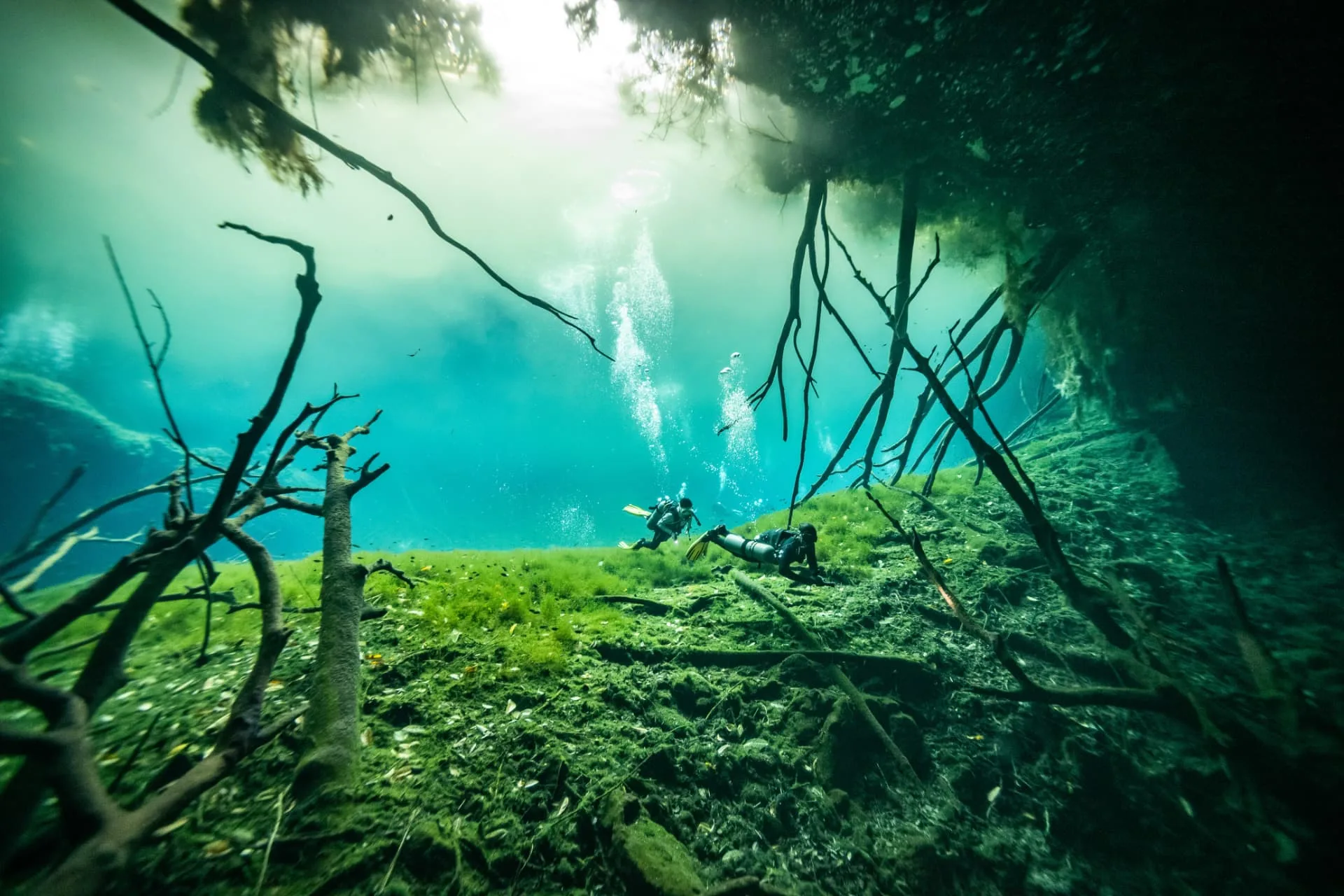
Shafts of daylight cutting through the water, usually best in the middle of the day.
Cenotes worth exploring · 8

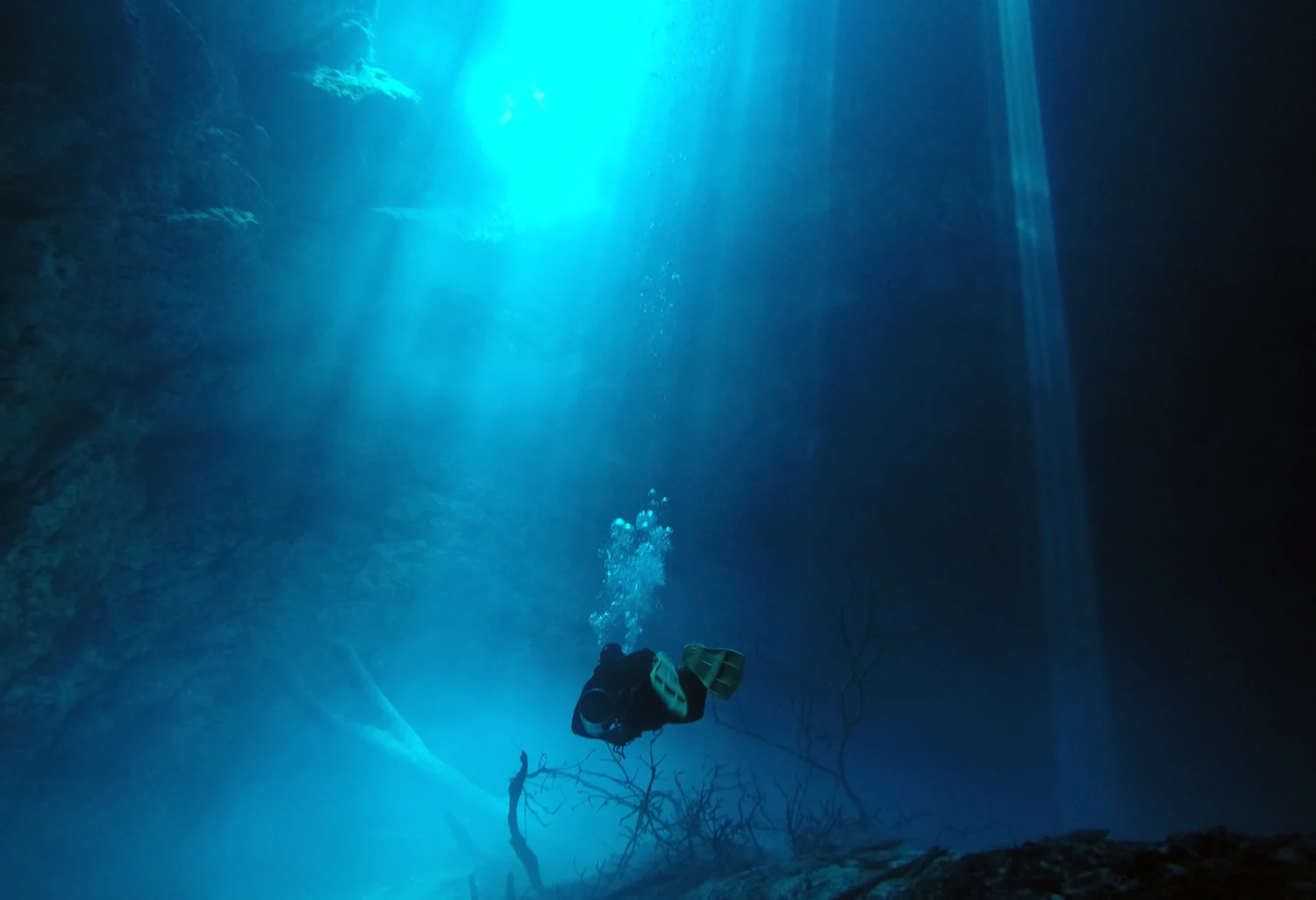
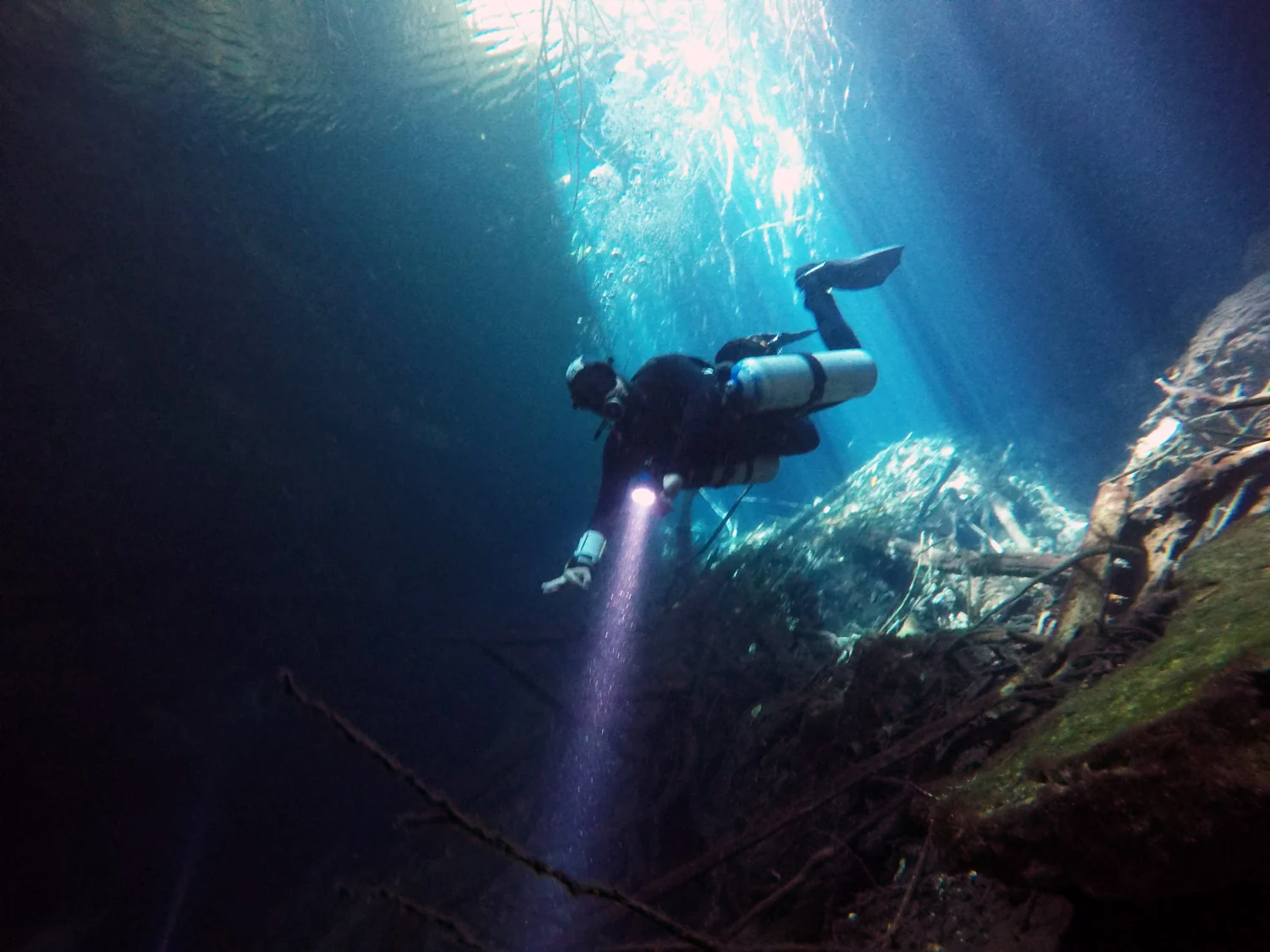
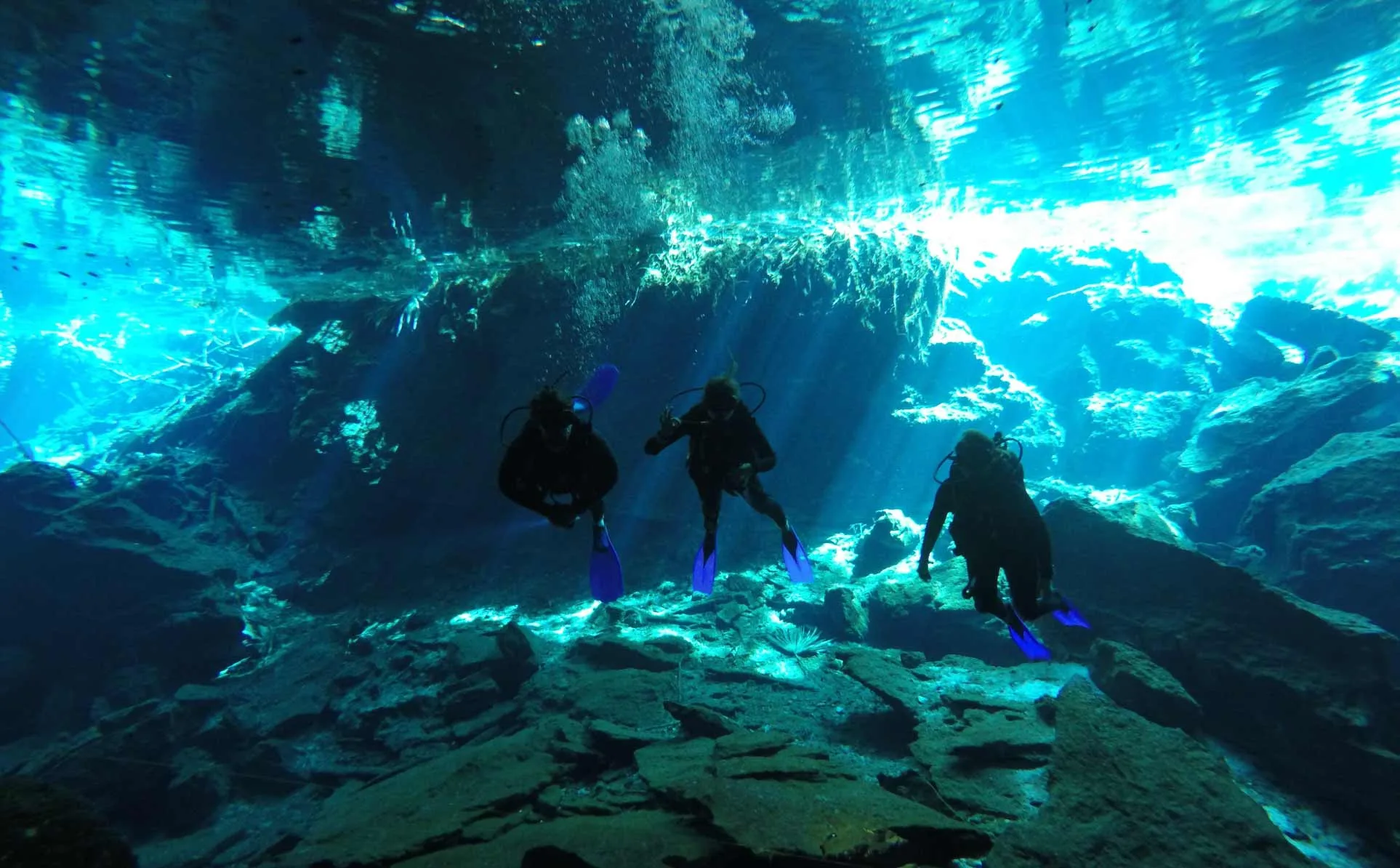
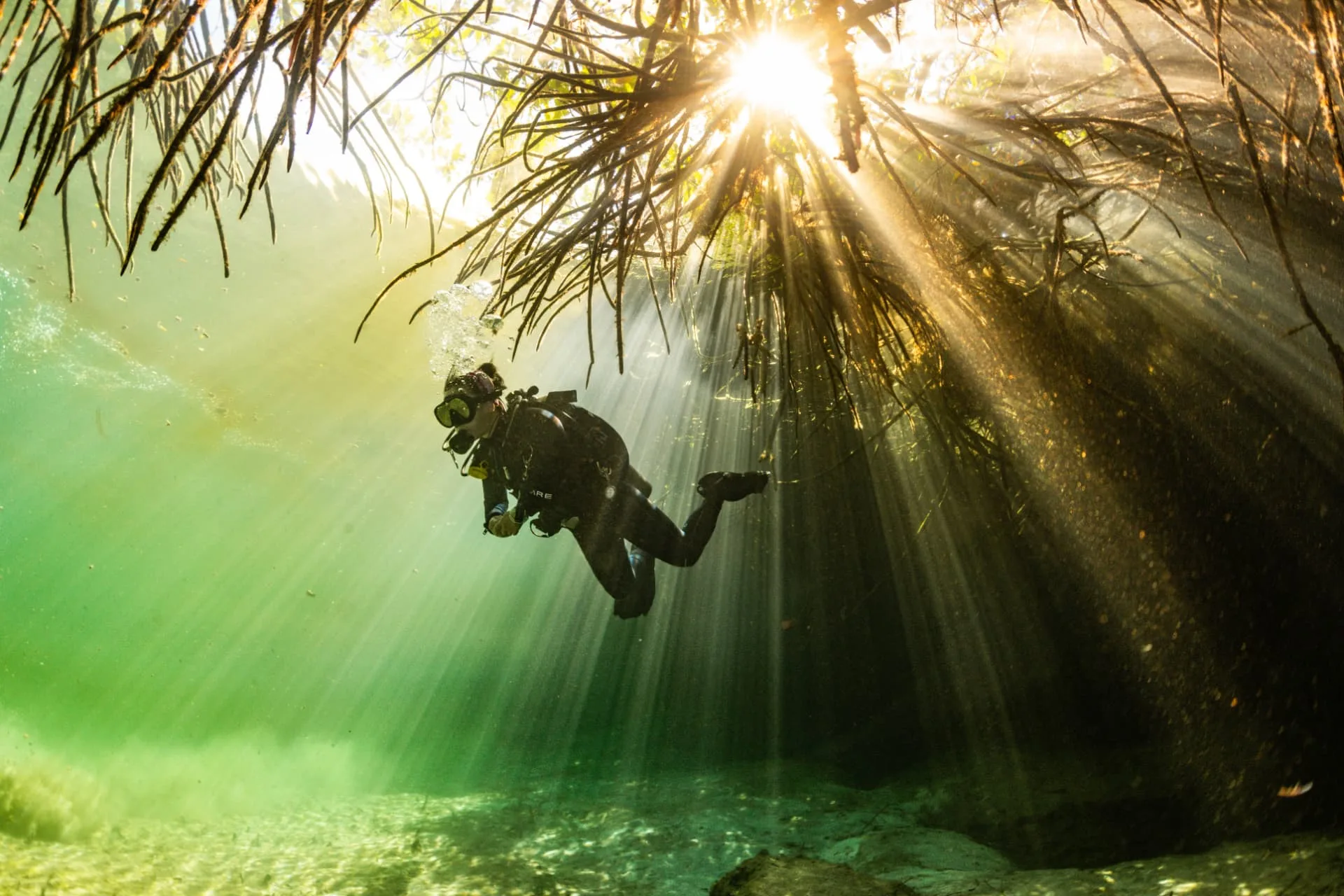
Discovery paths, not packages. Two dives don't always mean two cenotes — we help decide what fits your day.
Explore
Discover the cenotes.
Different environments. Different sensations. Different ways to experience the underground world of the Riviera Maya.

Taak Bi Ha
Formations · More enclosed cavern · High control
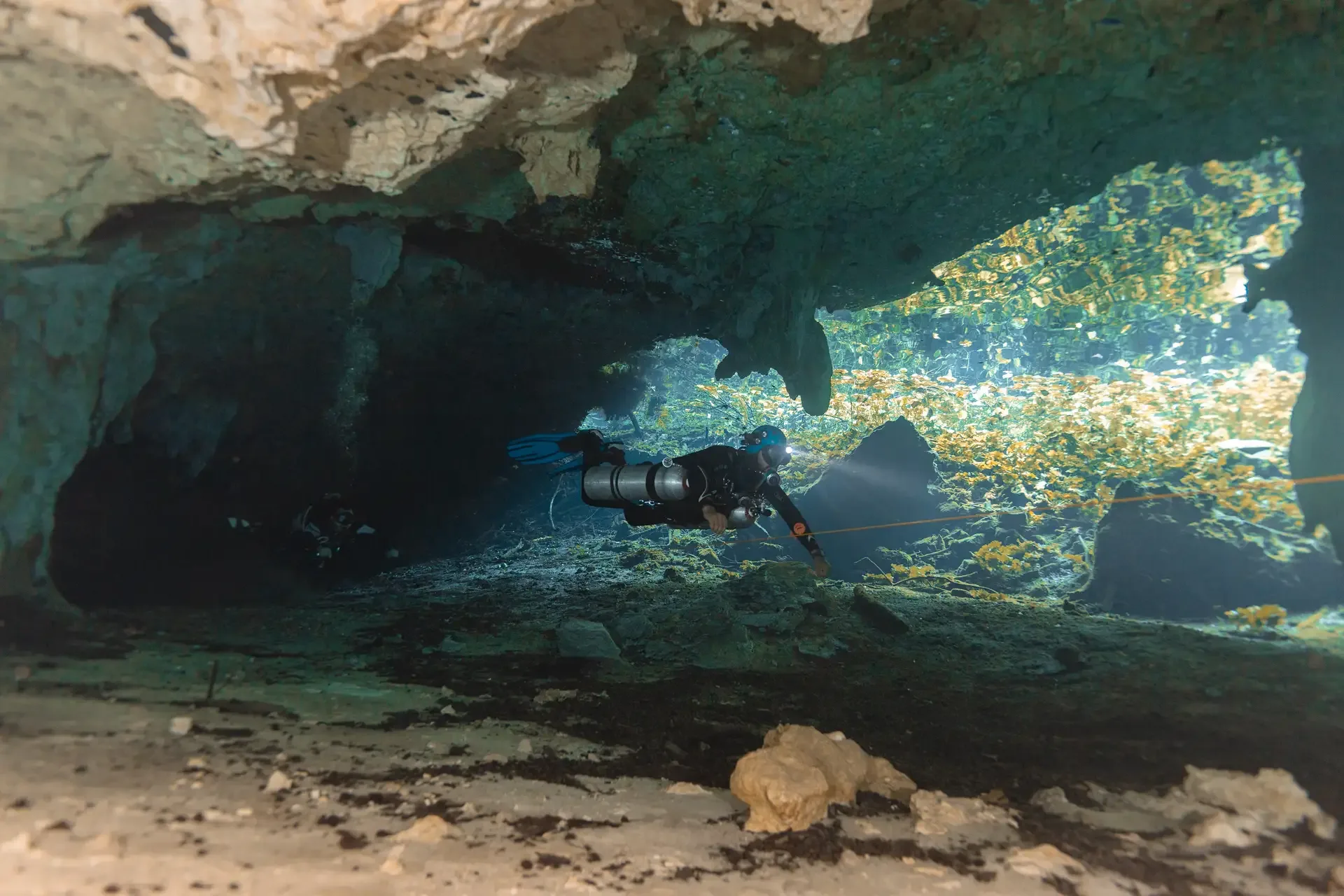
A very enclosed underground feeling, with extremely clear water, white limestone formations, stalactites and columns.
Explore Taak Bi Ha →

Yaakun
Scale · Haloclines · Depth
A large vertical cenote under a very wide crater.
Explore Yaakun →

Chac Mool
More enclosed cavern · Formations · Roots
The route from Little Brother toward Chac Mool, with a natural air dome along the way.
Explore Chac Mool →

Dos Ojos
Formations · Clear water · Cavern
Iconic shallow cavern diving in very clear water, with limestone formations and a strong visual connection with the cavern entrances.
Explore Dos Ojos →
The Pit
Light · Scale · Photography
When conditions align, sunlight enters through the opening and reaches deep into the water column.
Explore The Pit →

Kukulkan
Light · Halocline · Open cavern
A bright, relatively open cavern in the Chac Mool system.
Explore Kukulkan →

Angelita
H₂S cloud · Depth · Vertical
A dense hydrogen sulfide layer at around 30 m, with trunks and branches rising through it.
Explore Angelita →

Ponderosa
Light · Nature · Open cavern
Open, bright and closely tied to its natural surroundings.
Explore Ponderosa →

Dreamgate
Formations · More enclosed cavern · Precision
Extremely rich in formations: dense stalactites, stalagmites, columns and delicate decorations in a dark, more enclosed cavern.
Explore Dreamgate →

Chikin Ha
Halocline · Light · Cavern
Light, halocline and the passage between connected cenote environments.
Explore Chikin Ha →

Casa Cenote
Mangroves · Shallow · Open water
A long, open cenote lined with mangroves.
Explore Casa Cenote →

Carwash
Nature · Vegetation · Open cavern
Different from the formation-heavy cenotes: an open, natural setting where aquatic vegetation, lily pads, roots and sunlight connect the water with the jungle above, plus a shallow cavern section.
Explore Carwash →

Nicte Ha
Shallow · Control · Light & nature
A bright, shallow natural environment with very clear water, aquatic vegetation and lily gardens, natural light and a calm atmosphere.
Explore Nicte Ha →
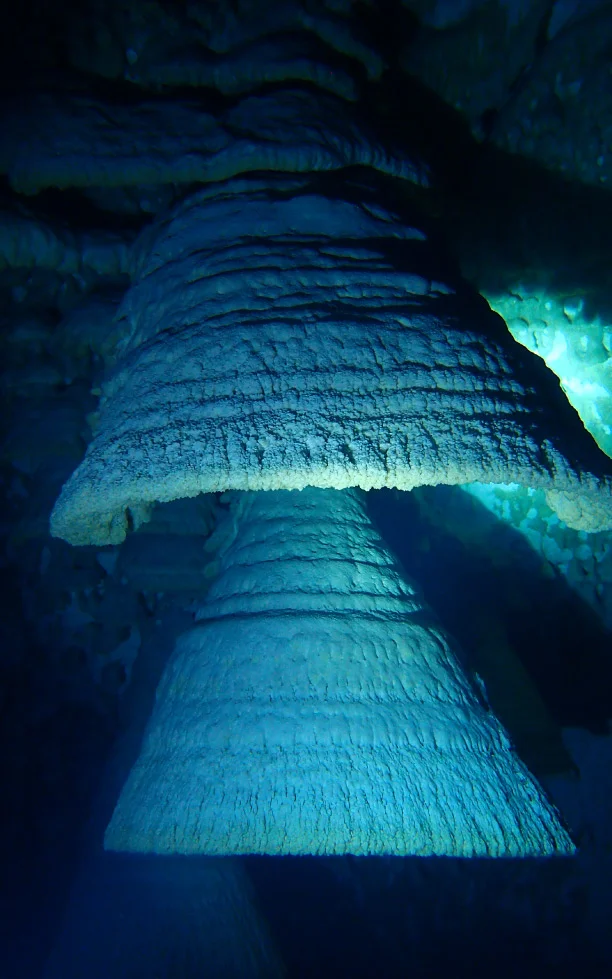
Zapote
Formations · Depth · Vertical
Hell's Bells — the main bell formations sit roughly between 29 and 35 m.
Explore Zapote →

Taak Bi Lum
Formations · Delicate cavern · Control
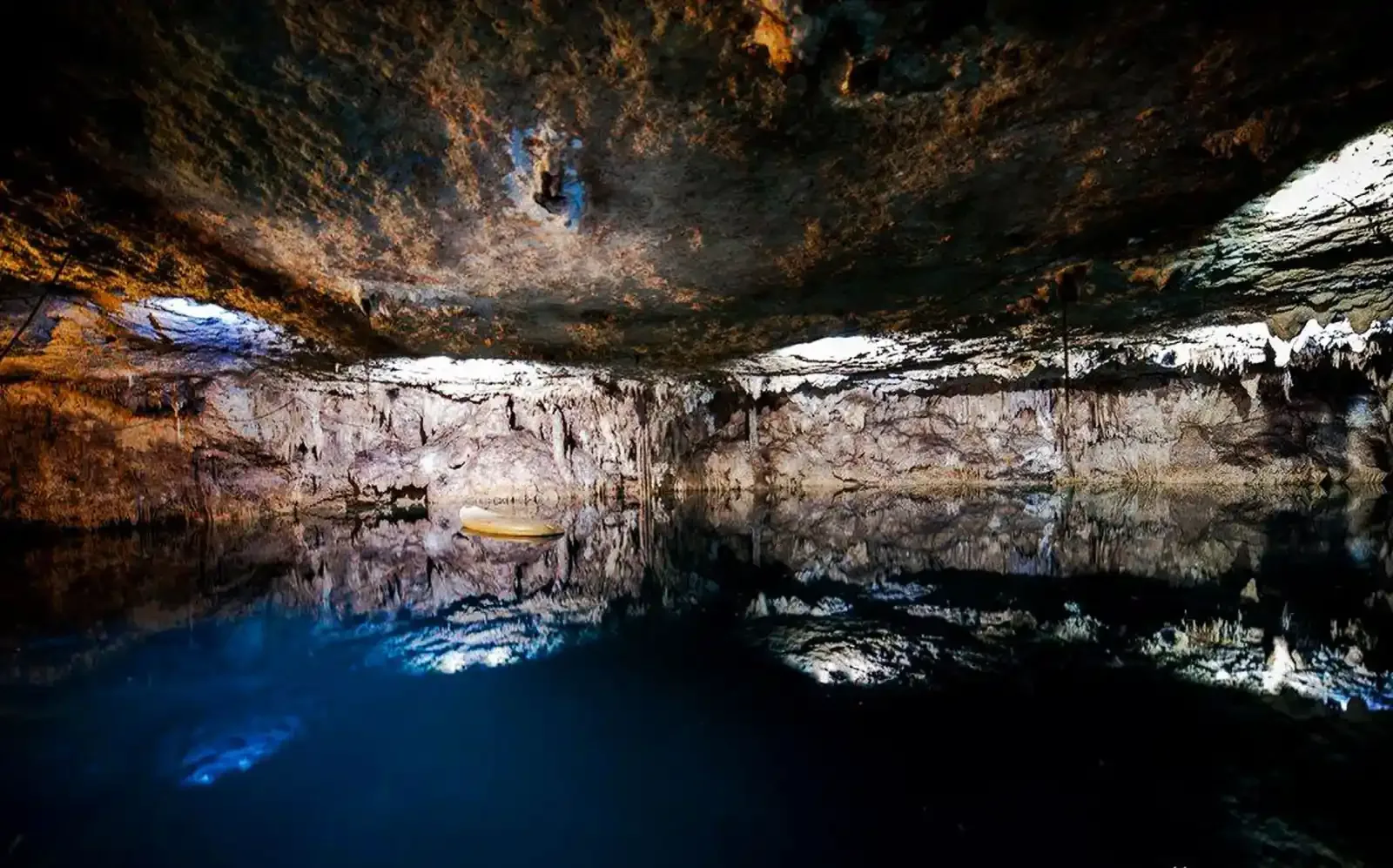
A semi-open cenote with a large underground chamber, dim natural light and large limestone formations.
Explore Taak Bi Lum →

Kin Ha
Formations · Light · Vertical
A vertical cenote about 50 m across.
Explore Kin Ha →
More cenotes
Experience levels
Different cenotes ask different things from the diver.
Depth alone doesn't determine how demanding a cenote dive can be. Passage size, available light, fragility, distance from the entrance and the environment itself all matter.
We use CREER's cenote classification as a reference for the characteristics and relative difficulty of each site. These levels are not a progression that CDT requires divers to complete in order. For most cenotes, we require the appropriate certification and recent diving within the last six months. Dreamgate, Taak Bi Ha and Taak Bi Lum additionally require a prior dive with CDT so your guide can understand your comfort, buoyancy and control before the dive.
Cenote difficulty levels follow the classification framework established by CREER — Comité Regional de Espeleobuceo, Ecología y Regulación — a regional organization focused on safety, conservation and education in cenote and cave diving in Quintana Roo. Characteristics describe each level, not every cenote equally.
01
Starter
Shallow, fairly constant depth · Wide passages · Constant natural light
Open Water or one-star (minimum)
02
Intermediate
Shallow · Smaller passages · Limited natural light · Halocline where present
Open Water or equivalent
03
Advanced
Deep · Fragile · Longer distance from the entrance · Dark
Advanced Open Water or equivalent
04
Expert
Longer distance from the entrance · Fragile · Dark · Deep
Advanced Open Water or equivalent
EX
Expert Only
Longer distance from the entrance · Fragile · Dark · Deep
Advanced Open Water or equivalent
Minimum age for every level: 15. Levels are a selection guide, not a guarantee.

Every cenote
has its own character.
Tailored to you
You don't have to choose alone.
Tell us about your certification, recent diving, experience and what you'd like to see. We'll match your profile and interests with the right cenotes, recommend combinations that work well together, and shape the route, pace and sequence into a dive plan built around you — whether it's one day or several.
Help Me Choose01
Your diver profile
02
Your interests
03
We build the plan
04
Your dive plan

The experience
The cenote matters.
So does how you dive it.
Private diving means the day can be shaped around your pace, experience and interests rather than forcing you into a predefined group itinerary.
How the private day works →

Cenotes,
tailored to you.
Tell us what kind of diving you're looking for. We'll help shape the right cenote experience around you.