


Cenote Diving vs. Cavern Diving vs. Cave Diving: What’s the Difference?
Exploring the underwater world of the Yucatán Peninsula’s cenotes
By Luis Felipe —
If you’re passionate about diving and curious about exploring environments filled with mystery, geological formations, and crystal-clear water, Mexico’s cenotes offer several very different underwater experiences.
Throughout the Yucatán Peninsula—and especially in Quintana Roo—cenotes provide access to some of the most extensive underwater cave systems in the world. However, diving in the open-water area of a cenote, entering a cavern, and going cave diving are not the same thing. Each environment has different limits, risks, and certification requirements.
Cenote Diving: The Gateway to the Maya Underworld
A cenote is a natural opening that provides access to groundwater.
In the open-water area of a cenote, divers have direct vertical access to the surface, with no rock ceiling overhead. Depending on the site, both certified divers and people without a diving certification may be able to participate in diving activities in these open-water areas with the appropriate instruction and supervision.
For someone who is not certified, this means completing the required theory and practical instruction with an instructor before entering the water. Certified divers receive a briefing covering the conditions, procedures, and specific characteristics of the cenote before the dive.
Beyond diving, cenotes also have a deep cultural connection to the Maya world, where many of these natural formations were considered sacred places.
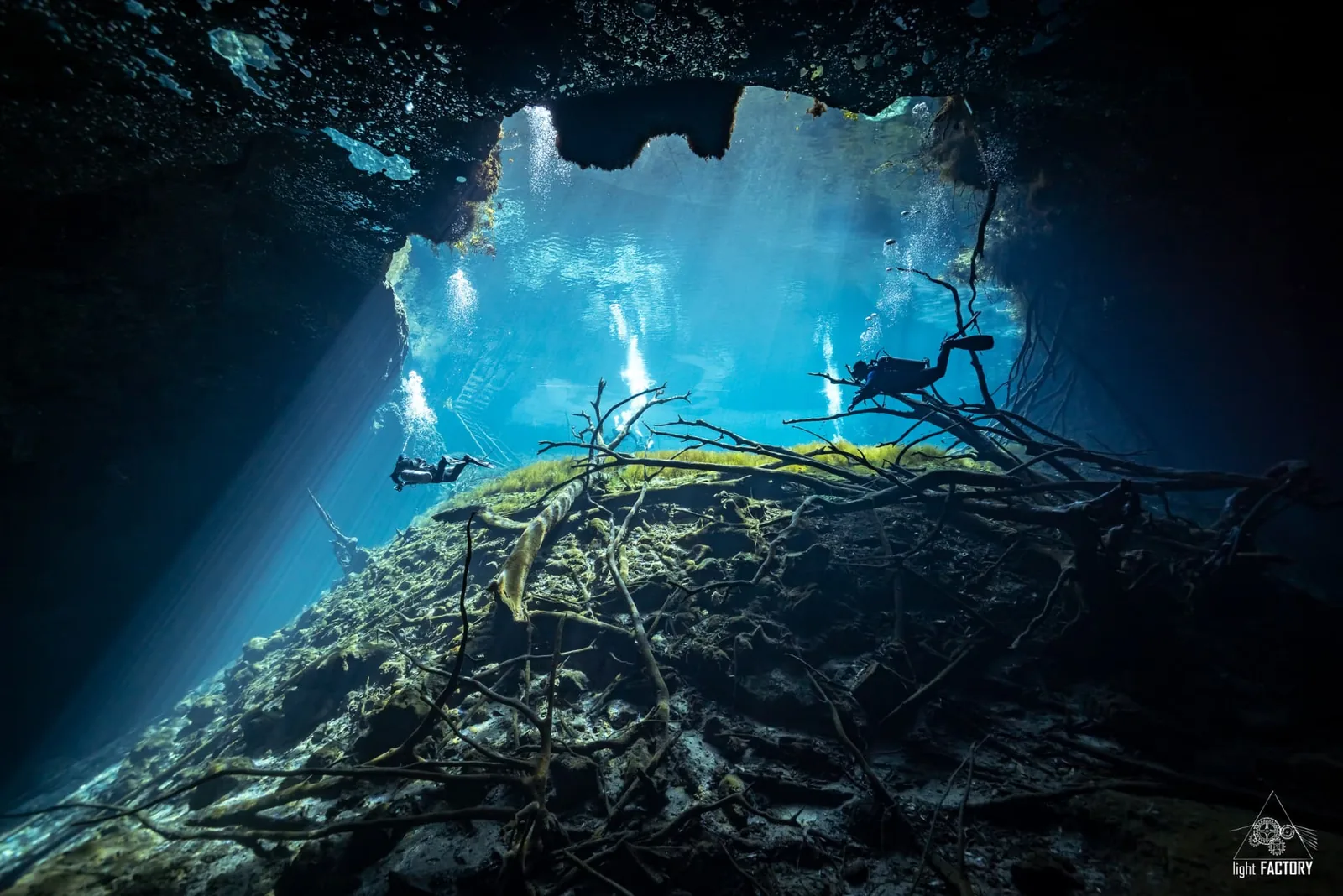
Cavern Diving: Where Natural Light Still Guides You
Cavern diving takes place in an overhead environment while remaining within the recreational cavern zone.
The defining characteristic is that divers remain close enough to the entrance to maintain access to natural daylight and the exit. This creates one of the signature experiences of cenote diving: swimming beneath limestone ceilings while still seeing sunlight entering from the outside.
Depending on the cavern and the applicable diving standards, the route remains within established penetration limits and follows a permanent cavern guideline.
What Makes Cavern Diving Special?
- Natural light
- Daylight remains visible, providing a constant visual reference toward the exit. It can also create spectacular effects as sunlight passes through crystal-clear freshwater, limestone formations, and suspended particles.
- Stalactites and stalagmites
- Many cenotes contain extensive geological formations created over thousands of years, when the caves were dry. Today, divers can explore spaces filled with stalactites, stalagmites, columns, and other limestone formations.
- Haloclines and thermoclines
- Some cenotes contain both freshwater and saltwater. Where the two layers meet, a halocline can form, temporarily distorting visibility and creating a distinctive shimmering effect. Temperature differences between water layers can also create thermoclines.
- Recreational diving
- Cavern diving can be accessible to certified recreational divers when conducted within established cavern limits and under the supervision of a properly qualified guide. Good buoyancy control and comfort underwater are especially important because of the overhead environment and the fragile formations.
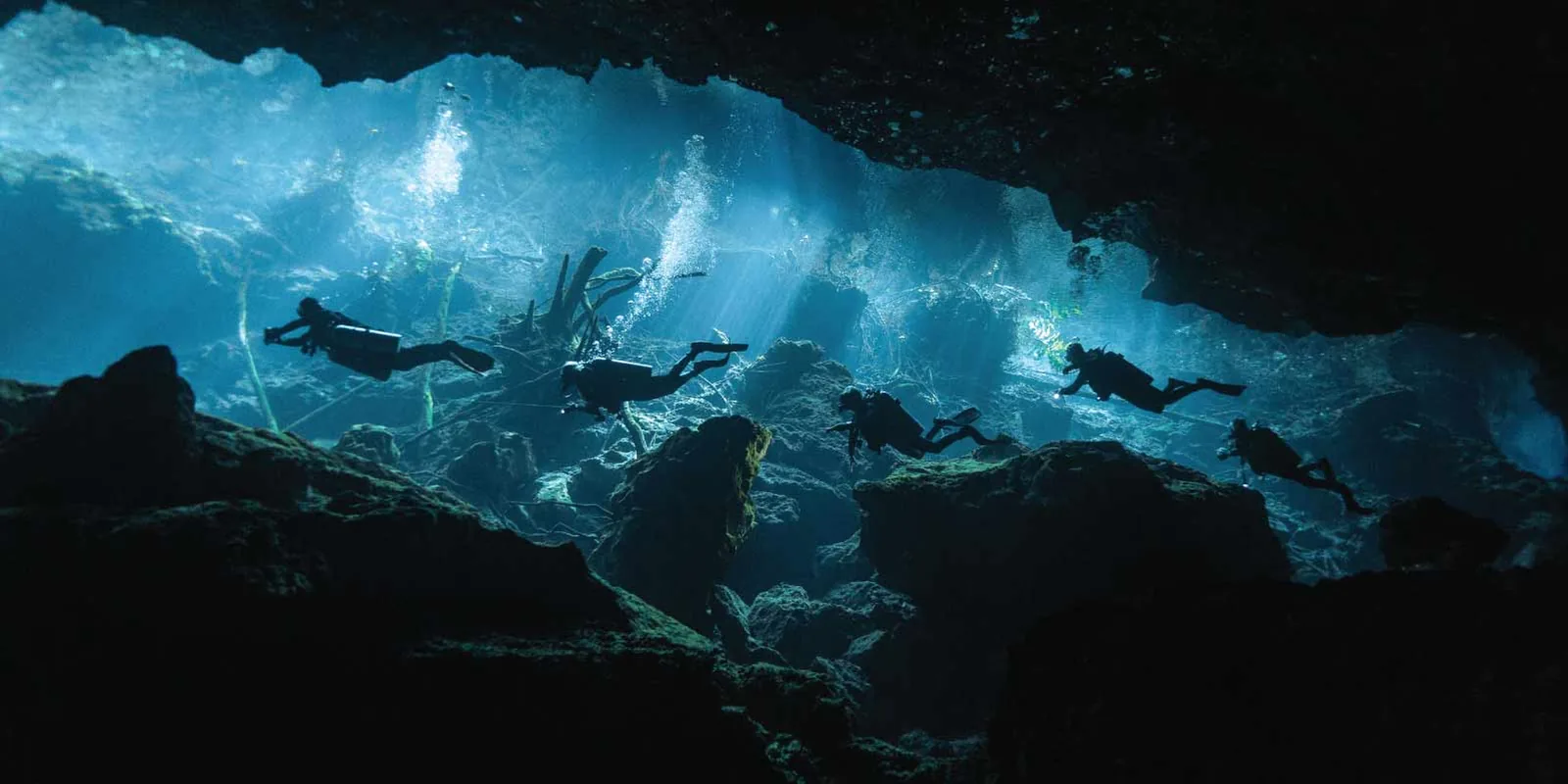
Cave Diving: Beyond Recreational Limits
Cave diving begins where the recreational cavern zone ends.
Unlike cavern diving, cave diving can involve areas with no natural light, significantly longer penetrations, complex navigation, and passages where a direct ascent to the surface is impossible. It is a form of technical diving that requires specialized training, procedures, and equipment.
What Makes Cave Diving Different?
- Total darkness
- Once natural light disappears, divers depend entirely on their lights and the cave guideline for navigation. A reliable primary light and backup lights are essential.
- Specialized training
- Cave diving requires specific, progressive education leading to the appropriate certification for the type of penetration being conducted. An Open Water or Advanced certification alone is not sufficient for cave diving.
- Gas management
- Cave divers must follow strict gas-management procedures because there is no option to ascend directly to the surface. Enough gas must always be reserved to exit the cave safely, including reserves for contingencies.
- Specialized equipment
- Cave-diving configurations typically include redundant breathing systems, multiple lights, reels or spools, line markers, and other equipment specifically designed for overhead environments.
- Navigation
- Cave systems can contain intersections, jumps, gaps, and multiple possible routes. Divers must understand how to use permanent and temporary guidelines and how to properly mark their route.
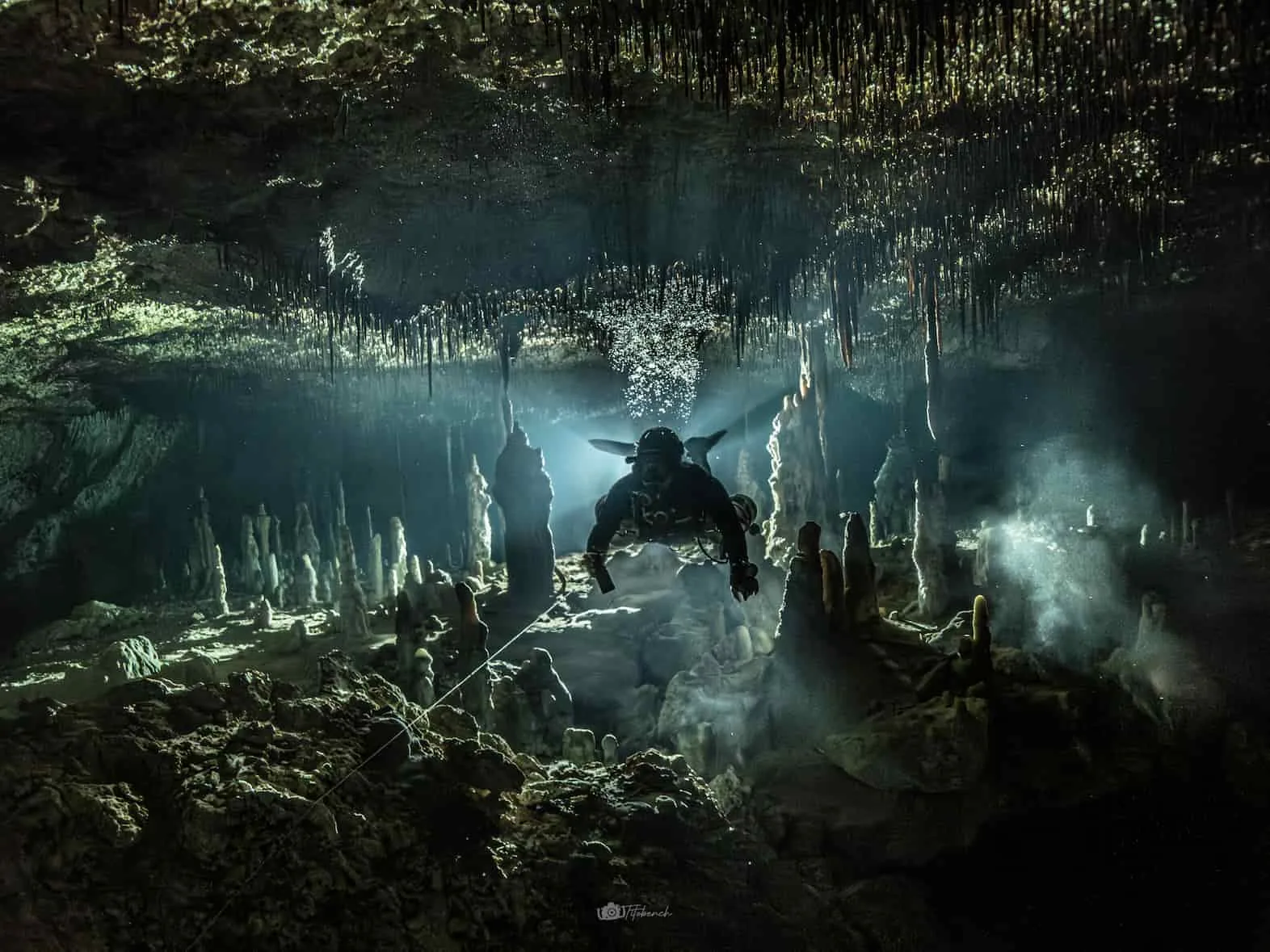
Sistema Sac Actun: An Underground Treasure of Quintana Roo
One of the region’s most extraordinary underwater cave systems is Sistema Sac Actun.
Its immense network of flooded tunnels, chambers, and passages has helped make the Riviera Maya one of the world’s most important destinations for cave diving and underwater exploration.
The name Sac Actun comes from the Maya language and is commonly translated as “White Cave,” referring to the pale limestone found throughout much of the system.
What Makes Sac Actun Extraordinary?
- Scale
- The system contains hundreds of kilometers of explored underwater passages.
- Geological beauty
- Its tunnels contain delicate stalactites, stalagmites, columns, and extensive limestone formations.
- Technical diving
- The complexity and scale of the system make it particularly significant for trained cave divers.
- History and archaeology
- Sections of the region’s cave systems also contain archaeological and paleontological evidence, giving these environments important scientific and cultural value.
Cavern vs. Cave: What’s the Difference?
The simplest way to understand the difference is to consider three things: light, distance from the entrance, and training.
A cavern remains within the recreational cavern zone, where natural light and access to the exit remain available within established limits. A cave extends beyond those limits and may involve complete darkness, greater penetration distances, complex navigation, and technical-diving procedures.
This distinction is fundamental because the training and risk-management requirements are very different.
For recreational divers visiting the Riviera Maya, cavern diving provides an opportunity to experience the spectacular overhead environments of the cenotes while remaining within recreational diving limits.
For properly trained cave divers, the region provides access to one of the most extensive underwater cave environments on the planet.
Discover the Cenotes of the Riviera Maya
Whether you dive in the open-water area of a cenote, explore a cavern illuminated by natural light, or enter the cave environment with the appropriate technical certification, each experience reveals a different side of the Yucatán Peninsula’s underground world.
Crystal-clear freshwater, limestone formations, haloclines, and extraordinary light effects make cenote diving one of Mexico’s most distinctive diving experiences.